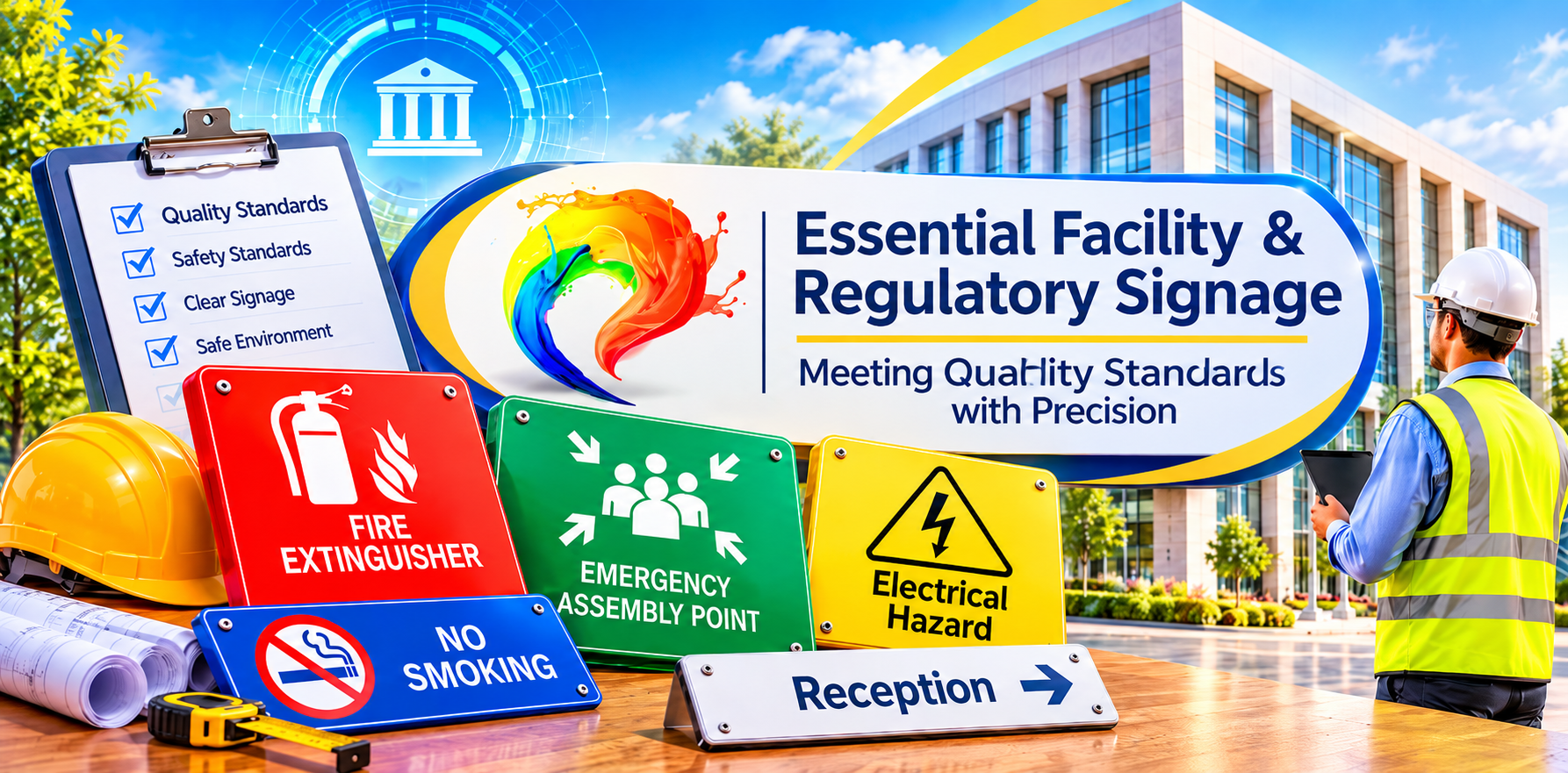
High-quality, code-compliant signage ensures your facility passes governmental inspections, meets strict accreditation criteria, and creates an accessible, safe environment for staff, visitors, and emergency responders.
Key Categories of Mandatory Regulatory & Compliance Signage
Different governing bodies, civil defense departments, and international accreditation organizations require specific sets of visual indicators. Below are the primary signage categories required for facility compliance and official approval:
1. Life Safety & Civil Defense Signage
Emergency readiness and life safety systems must be clearly marked to ensure immediate action during critical events and to satisfy municipal fire and civil defense codes.
Emergency Exits & Evacuation Routes: Illuminated exit signs, directional egress arrows, floor-by-floor evacuation maps, and stairwell numbering.
Fire Safety Equipment: Clear identification for fire extinguishers, hose reels, alarm pull stations, and suppression systems.
First Aid & Assembly Points: High-visibility markers for medical stations, automated external defibrillators (AEDs), emergency eye-wash stations, and outdoor assembly areas.
2. Accessibility & Universal Design Signage
To receive facility certification and adhere to non-discrimination accessibility regulations, buildings must incorporate accessible design markers.
ADA / Accessibility Compliant Signs: Tactile lettering, Grade 2 Braille, and high-contrast visuals for permanent room designations (restrooms, stairwells, exits).
Accessible Routes & Parking: Clear markers for accessible entrances, ramps, elevators, and dedicated parking spaces.
3. Occupational Health, Safety & Industrial Signage
Industrial, manufacturing, laboratory, and operational spaces must follow occupational safety regulations to minimize hazards and satisfy labor ministry standards.
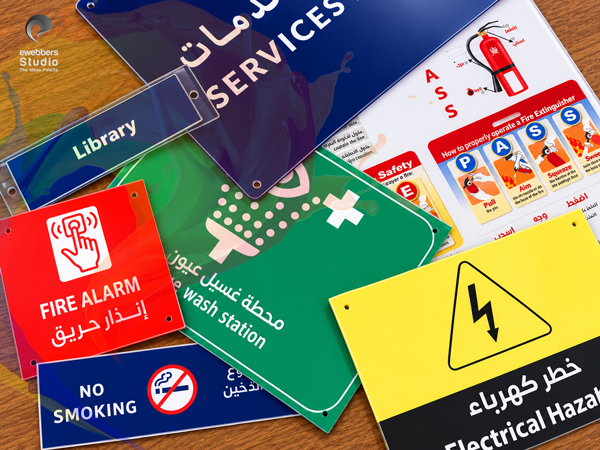
Hazard Warnings: High-voltage warnings, chemical hazard indicators, biohazard alerts, and radiation symbols.
Mandatory PPE Notices: Clear instructions requiring safety helmets, eye protection, ear defense, or specialized footwear prior to entering restricted zones.
Operational Rules: Machine operation guidelines, maximum load limits, and authorized personnel-only access points.
4. Facility Navigation & Administrative Signs
Government inspections often evaluate overall site layout, traffic management, and clear functional division to ensure public safety and organized flow.
Room Identification: Permanent room numbers, department labels, and executive office designations.
Traffic & Parking Management: Speed limits, one-way directional indicators, loading dock rules, and reserved agency parking markers.
Public Information & No-Smoking Notices: Standardized regulatory notices including non-smoking area declarations and CCTV surveillance warnings.
Why Choose Professional Signage Solutions for Your Accreditation Needs?
Meeting governmental and accreditation requirements demands accuracy in design, durability in materials, and deep knowledge of spatial regulations.
Material Durability
Weatherproof, UV-resistant, and fire-rated materials built to withstand harsh industrial and outdoor environments.
Regulatory Precision
Exact color matching, standardized iconography, correct typography, and compliant Braille/tactile heights.
End-to-End Execution
Complete solutions from site survey and design to precision manufacturing and professional installation.
Ensure Your Facility is Fully Compliant
Do not let non-compliant or missing signage delay your licensing, facility accreditation, or government approvals. Contact our team of compliance specialists today to schedule a site audit, evaluate your regulatory needs, and receive tailored design and installation solutions.